The Training
Can't I just buy the VR games and apps and run the drills myself?
You can buy the equipment. You can't buy the system. Dr. LaPlaca built a proprietary progressive overload framework — including the A.R.E.S. Performance Suite — that determines which drills you do, in what doses, in what sequence, and when to progress. The exercises are the easy part. The dosing, sequencing, and training adaptations are the science. That's what AESV owns. That's what makes the training work.
Why do I need a CPVT trainer?
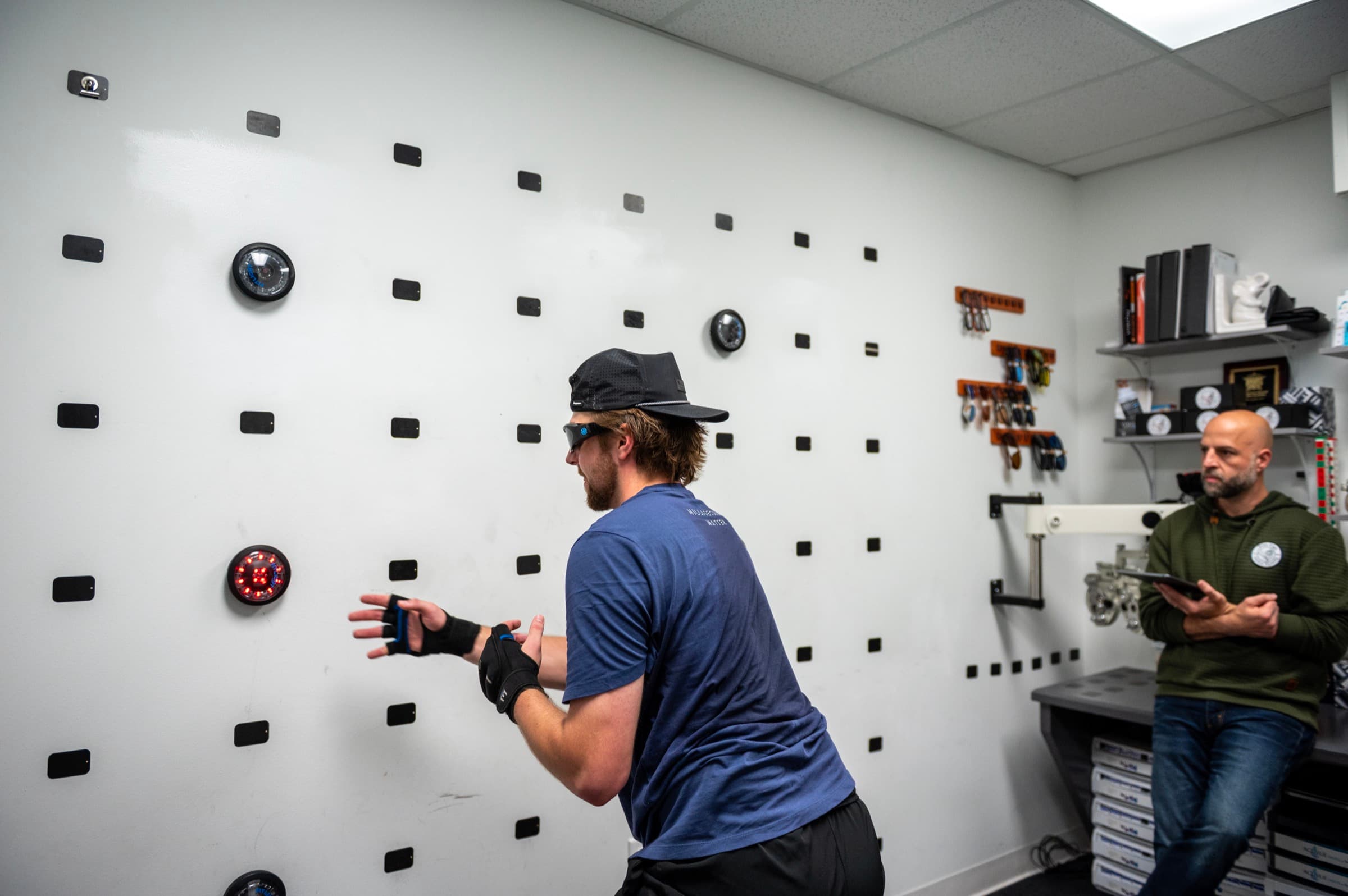
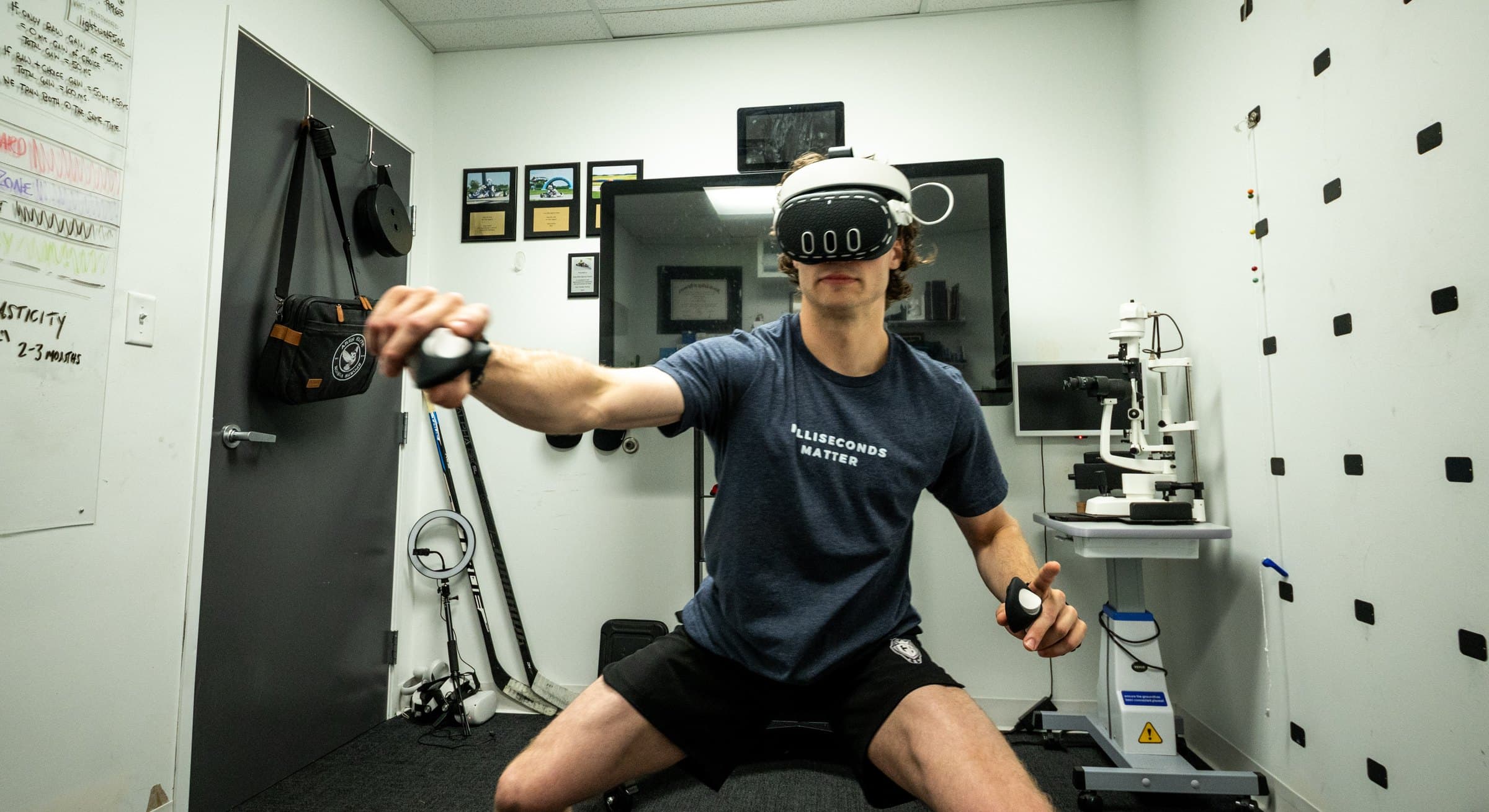
To take an identifiable error in your play and connect it to the neurocognitive system responsible for that breakdown — then use the technology and methodology to deliver training that targets that system directly, and prove the adaptation with objective data. The trainer's job is finding the Goldilocks zone: the sweet spot that challenges the brain at the right level of stimulus to force an adaptation. That's a real-time decision, made session by session from your data and the trainer's experience, following the Ares methodology.
How soon will we see results?
Most goalies notice sharper reads within about 8 weeks of consistent training. Dr. LaPlaca tracks the data, so you can see the progress — not just feel it.
What equipment do I get?
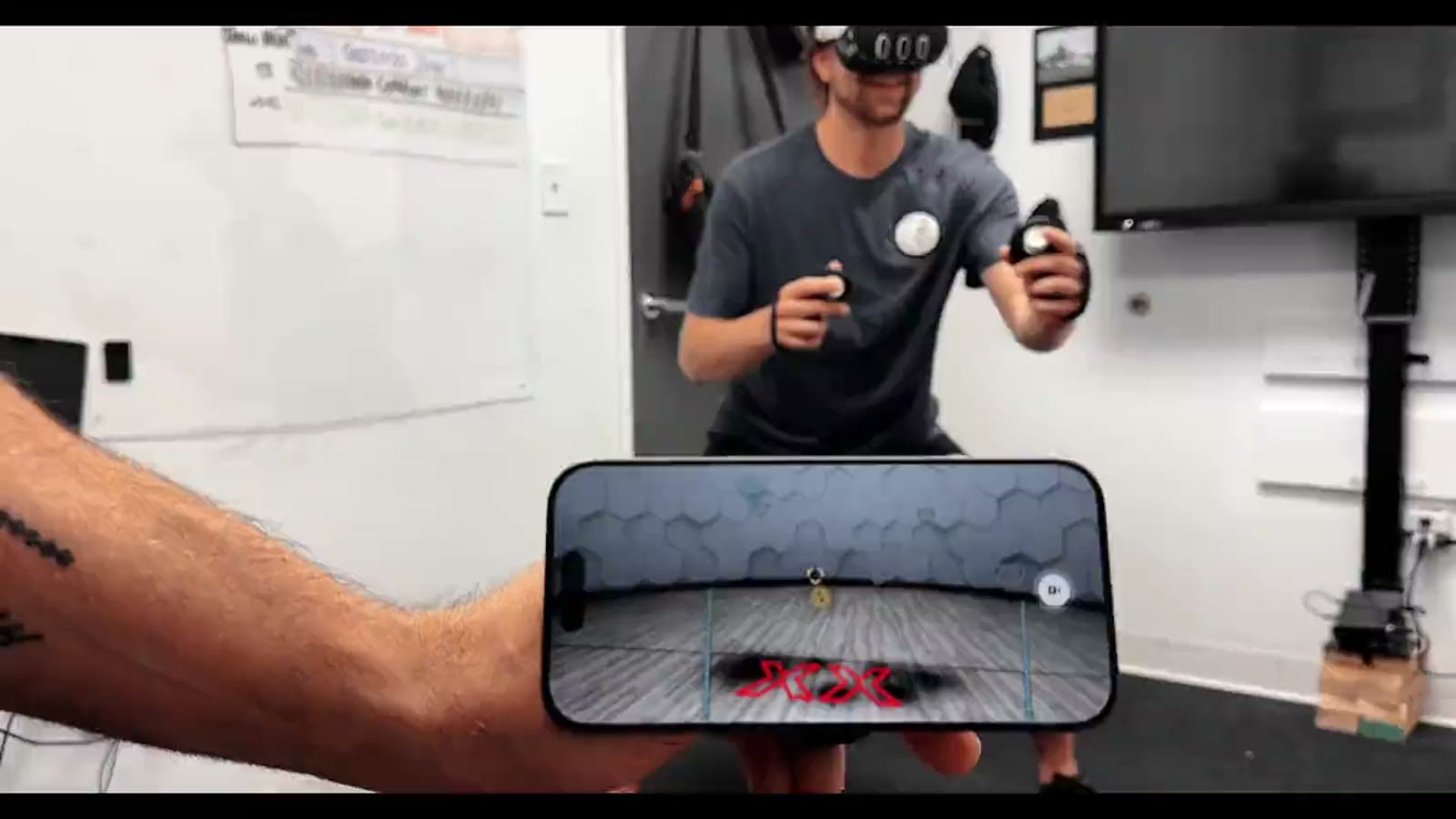
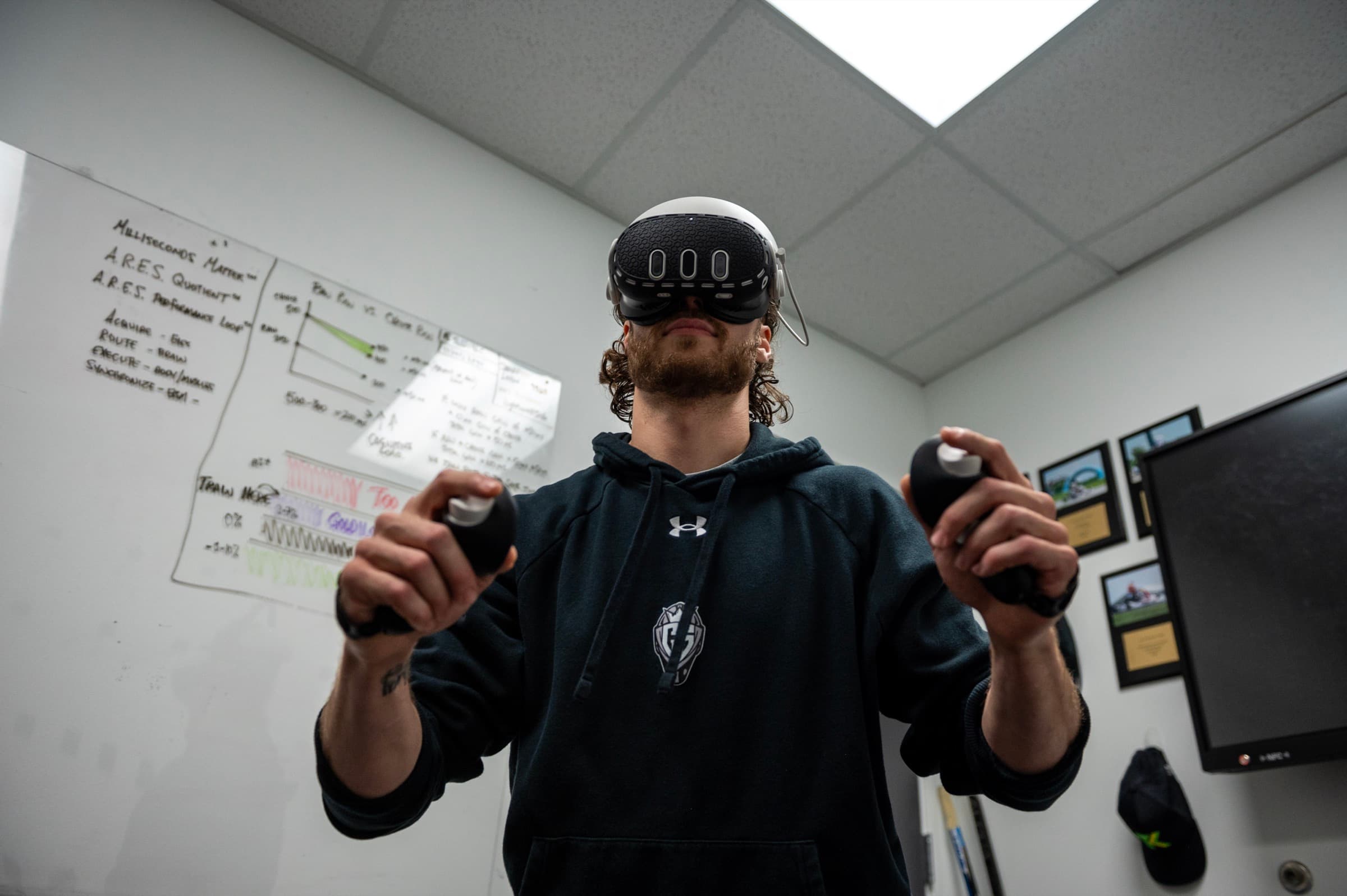
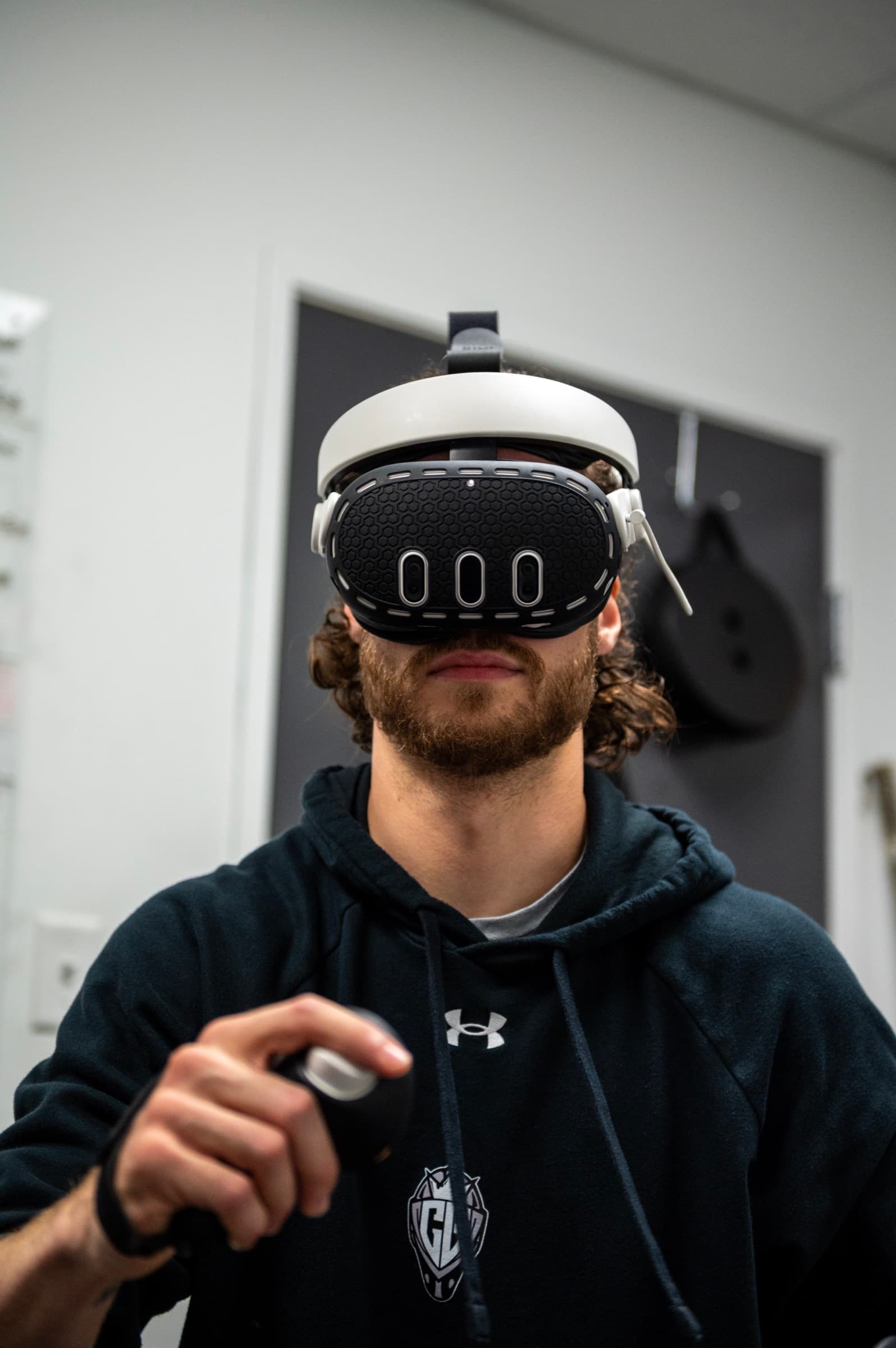
Your kit ships direct: a Meta Quest headset with the proprietary A.R.E.S. training applications, the A.R.E.S. Performance Suite software, stroboscopic training glasses, and accessories. It's priced into the monthly and it's yours to keep. One thing isn't included — the display the Performance Suite runs on. You choose and supply that yourself: an iPad, a Windows Surface tablet, or a 55-inch smartboard (around $1,500) if you want the full setup from the Ares Elite office.
The Evaluation
Who runs the evaluation?
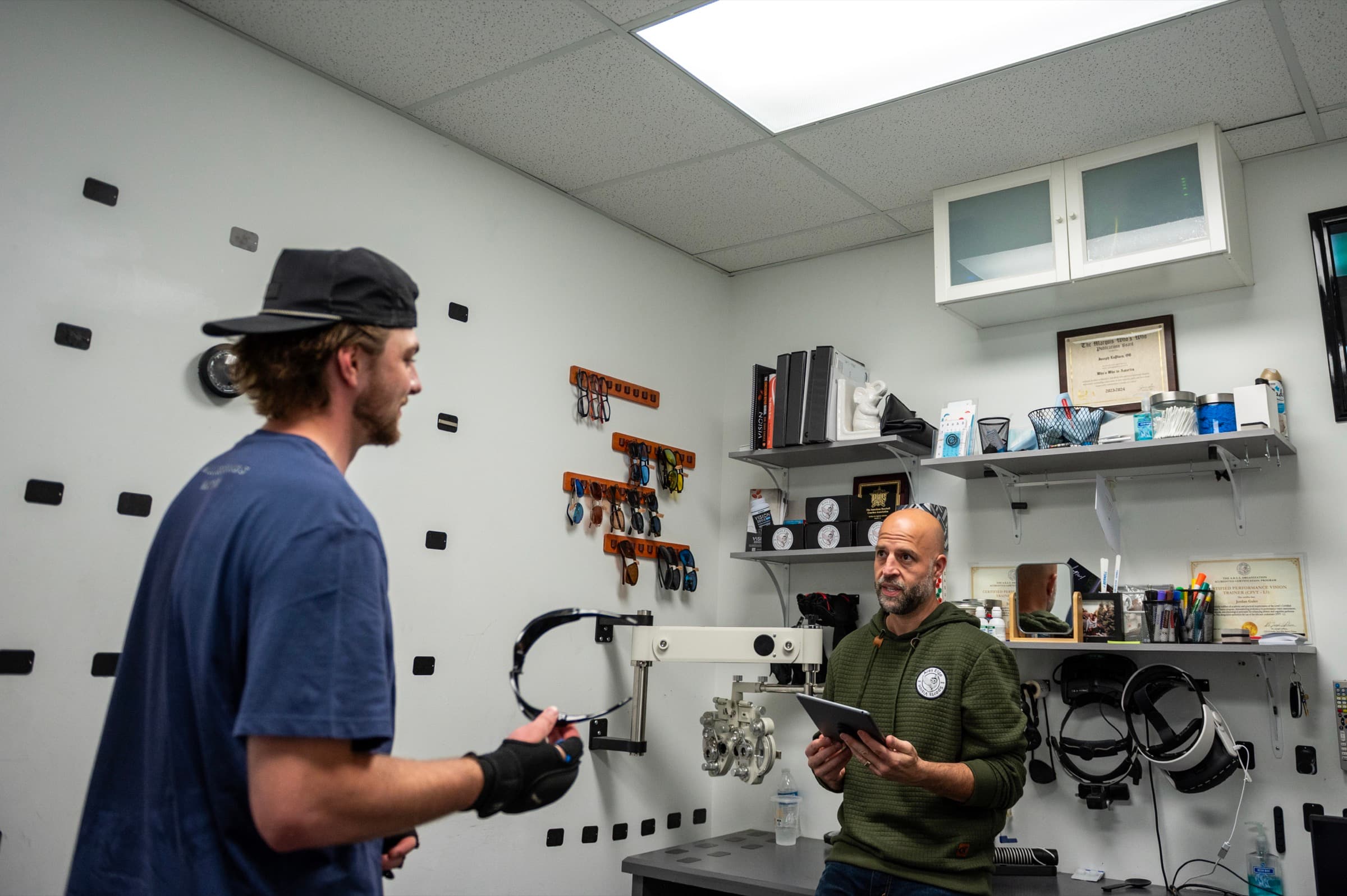
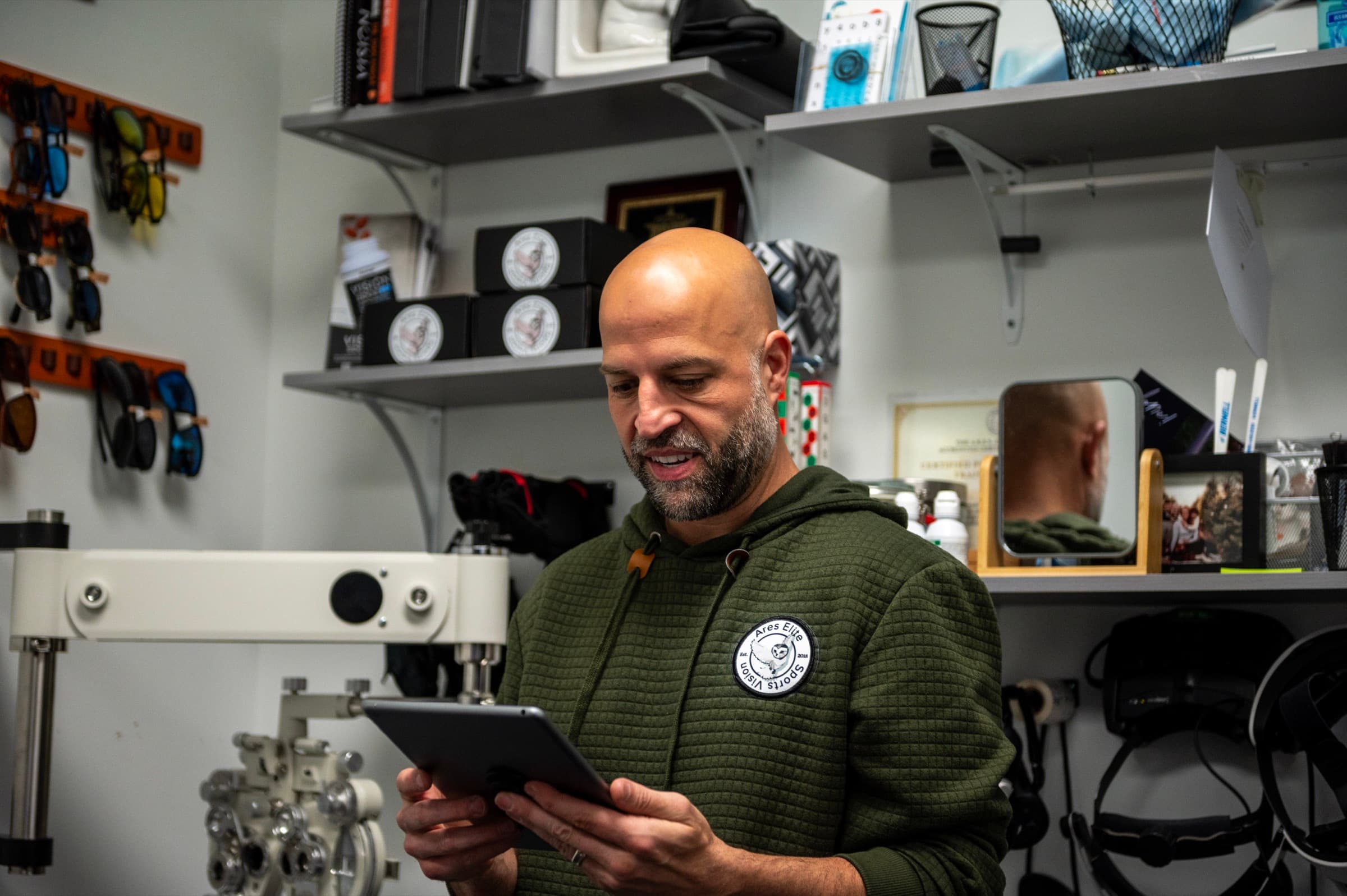
Dr. Joseph LaPlaca, sports optometrist and founder of Ares Elite Sports Vision. He administers the evaluation, designs the visual-cognitive training programming, and runs AESV's concussion testing. Cam delivers the ongoing training as an A.R.E.S. Certified Trainer inside the system.
Where does the evaluation happen — and what if we're not near Carmel?
In person at the AESV Carmel office — about 60–75 minutes. A real baseline requires an AESV-certified sports optometrist, so it can't be done remotely. Out-of-area families make one trip to establish it, then get set up to train at home. Training can be remote; the evaluation can't.
Is this medical advice — and how does the concussion baseline work?
The evaluation is a performance baseline, not a diagnosis or treatment. As a built-in benefit, it produces a comprehensive picture of your visual-cognitive systems. Dr. LaPlaca's concussion testing makes the baseline clinically meaningful — medical professionals can reference it when diagnosing, recovering, or clearing return-to-play after a head injury. If a head injury occurs, share the report with your medical team.
Eligibility
Is this only for goalies?
No — the A.R.E.S. system trains any athlete's visual-cognitive skills. Cam specializes in hockey: goalies, skaters, and officials. Athletes in other sports work directly with Dr. LaPlaca and the AESV team.
Cost & Commitment
What does the evaluation cost?
$449, one-time, paid directly to AESV. It doubles as a concussion baseline — if you ever take a hit, Dr. LaPlaca can re-evaluate and oversee your return-to-play progression.
Is there a commitment?
The Elite Program is $499/mo on a six-month commitment. The evaluation is separate and one-time.
If I stop after six months, what do I keep?
The equipment is yours. It's priced into the monthly, so once you've completed the six-month term you keep the headset, the glasses and the accessories whether you continue or not. The A.R.E.S. Performance Suite and its guided drills come with your training while you're enrolled.
Can more than one child use the setup?
Yes — the kit lives in your home and more than one athlete can train on it. Each athlete needs their own evaluation and their own program, since the training is calibrated to their baseline and the sessions are 1-on-1. The $499/month is per athlete; the equipment isn't duplicated.